

CIS Controls v8 Implementation for Small Business Roadmap
Small businesses tend to buy security the way they buy office furniture: when something breaks, replace it quickly and get back to work. The problem is that attackers count on that habit. They do not need a sophisticated exploit if your laptops are unmanaged, accounts never get cleaned up, and backups are untested.
CIS Controls v8 gives SMBs a way to turn security into repeatable operations. Not a pile of products. A set of prioritized safeguards that can be implemented with limited staff, measured over time, and explained to leadership in plain language.
Why CIS Controls v8 works for SMBs (when you keep it practical)
Many security frameworks read like they were written for companies with dedicated teams and spare time. CIS Controls is different because it was built around common attack paths and mapped to real-world actions. Version 8 also reflects modern environments where “the network” includes laptops, SaaS apps, cloud workloads, and vendors.
If you are a Sacramento-area SMB, the local realities matter too. You might have a small internal IT team. You might be sharing responsibilities across operations, finance, and compliance. In healthcare, you might be balancing security improvements with EMR decisions, integrations, and HIPAA expectations.
The main value of CIS Controls v8 is focus. It pushes you to answer basic questions early:
- What devices and software exist?
- Where is sensitive data stored and shared?
- Who can access what, and how do you prove it?
- How quickly can you recover when something goes wrong?
Those answers become your baseline for every later improvement.
Start with Implementation Group 1 (IG1), not the full list
A common failure mode is trying to “do CIS” by treating all controls as equal. For most SMBs, IG1 is the correct target for year one because it represents essential cyber hygiene. It is the set that reduces the most common risks without requiring a mature security program.
You still need to tailor it. A cloud-first professional services firm will emphasize identity, device management, and SaaS logging. A clinic will spend more time on data handling, audit trails, and third-party access tied to the EMR.
To keep the scope tight, start by assigning ownership. Not ownership in theory, ownership with a name and a weekly calendar block.
- Business owner or executive sponsor: approves priorities, accepts risk, funds gaps that block progress
- IT lead or MSP: implements and maintains controls, reports on metrics monthly
- Department managers: reinforce process changes, set expectations for staff behavior
- Security partner (optional): validates design, helps with monitoring, supports incident response
The first 30 days: get your bearings before you buy anything
Before you tune alerts or compare EDR vendors, make sure you can answer “what do we have?” accurately. CIS Controls 1 through 3 exist for a reason: inventory is the foundation that keeps everything else from turning into guesswork.
A strong first month usually includes a lightweight baseline assessment and quick stabilization work. That can be done by internal IT, a co-managed partner, or a managed IT provider.
- Asset inventory
- Software inventory
- Admin account cleanup
- MFA for admins and remote access
- Backup review
One sentence that belongs on a whiteboard: if you cannot find it, you cannot secure it.
A year-one implementation plan you can actually run
The goal is steady progress without burning out the people doing the work. Think in quarters, with each quarter producing evidence you can show to leadership, auditors, or an insurance questionnaire.
Quarter-by-quarter roadmap (SMB-friendly)
| Quarter | Primary CIS v8 focus | What “good” looks like by end of quarter | Proof you should be able to produce |
|---|---|---|---|
| Q1 | Controls 1-4 and basic 5-6 | Known device list, known apps, data locations identified, secure baseline settings defined for endpoints and key systems, MFA enforced for admins | Inventory export, baseline configuration checklist, MFA enrollment report, list of approved software |
| Q2 | Controls 5-7 and 10 | Least privilege applied, stale accounts removed, patching cadence established, vulnerability scanning routine, malware defenses standardized | Account review log, patch compliance report, vulnerability scan results with remediation notes, AV/EDR coverage report |
| Q3 | Controls 8, 11, 14, 15 | Centralized logging for critical systems, backups meet RPO/RTO targets and restores tested, staff training running, incident response basics documented | Log source list, restore test record, training completion, simple incident runbook and contact list |
| Q4 | Fill IG1 gaps and stabilize operations | Fewer exceptions, fewer one-off fixes, better visibility, measurable improvement quarter over quarter, vendor access tightened | CIS self-assessment status, trend charts, vendor access register, tabletop exercise notes |
This is also a good place to decide what not to do yet. Many SMBs do better by delaying advanced work until the basics are repeatable. A shaky inventory plus a complex SIEM is just expensive uncertainty.
The “Top 6” starting point: what most SMBs should prioritize first
Even inside IG1, some safeguards carry more weight because they support everything else. When time is limited, emphasize these building blocks first:
- Control 1: Inventory and Control of Enterprise Assets
- Control 2: Inventory and Control of Software Assets
- Control 3: Data Protection
- Control 4: Secure Configuration of Enterprise Assets and Software
- Control 5: Account Management
- Control 6: Access Control Management
If you are in healthcare, these map cleanly to practical requirements: knowing where ePHI lives, controlling access to it, proving who did what, and reducing the odds that malware spreads from an unmanaged endpoint.
Metrics that leadership will accept (and your team can collect)
Metrics should be boring and easy to maintain. If they require hours of manual work each month, they will stop. Aim for small sets of numbers that reflect coverage, speed, and exposure.
A useful starter set looks like this:
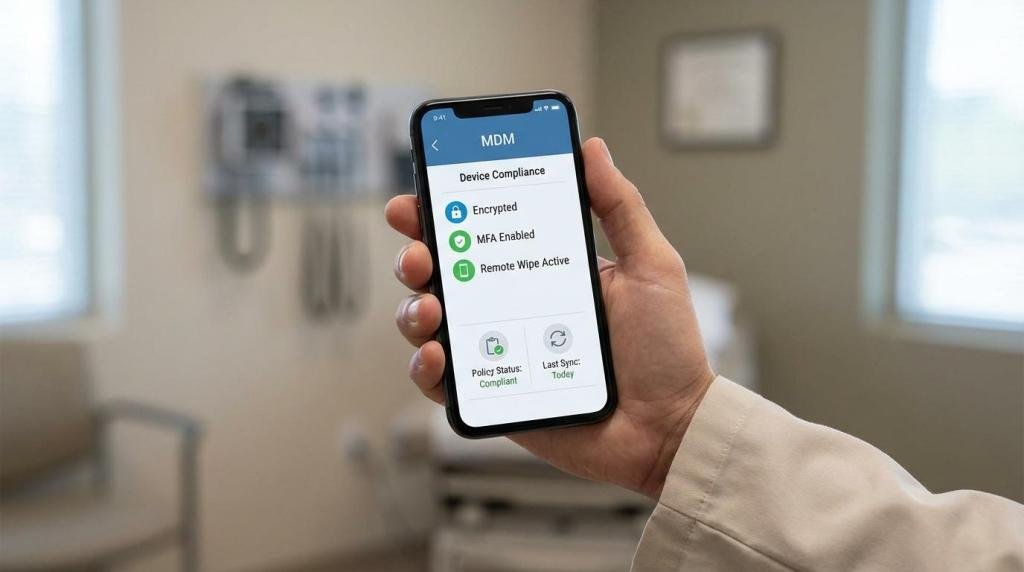
- Asset coverage: percent of devices reporting into management tooling (MDM/RMM) versus discovered on the network
- Patch health: percent of endpoints fully patched within your target window (example: 14 or 30 days)
- MFA coverage: percent of users with MFA enabled, plus separate tracking for admin accounts
- Backup confidence: last successful restore test date for each critical system
- Phishing resilience: report rate and click rate from training exercises
- Vulnerability exposure: count of critical findings older than your remediation target
In an SMB, these numbers do double duty. They guide technical work, and they create a defensible story for customers, insurers, and regulators.
Tooling choices that keep costs under control
CIS Controls does not require a specific vendor stack. It requires outcomes. That means you can start with built-in capabilities and add services only where you need coverage or expertise.
A common low-friction approach for SMBs is to standardize around a small set of platforms:
- Endpoint management (MDM/RMM) to enforce configuration, patching, and inventory
- Endpoint security (AV or EDR) with centralized visibility
- Email security and phishing protections
- Centralized logging for a short list of critical sources
- Backup that is monitored, plus routine restore testing
Avoid “tool sprawl.” Each new dashboard becomes a new place to miss an alert. If you do add tools, make sure they connect to a process someone owns.
Logging and monitoring: do less, do it well
Control 8 (Audit Log Management) often intimidates SMBs because it sounds like a 24/7 SOC requirement. Start smaller.
Pick a handful of log sources that answer questions you will actually ask during an incident:
- Identity provider sign-ins (Microsoft, Google, or your SSO tool)
- Firewall or secure web gateway events
- EDR alerts
- Server authentication logs for systems that hold sensitive data
- EMR and key SaaS audit logs when available
Centralize them, retain them, and review them on a schedule. If you have no one to review them, that is a signal to consider managed monitoring.
Healthcare and EMR realities in the Sacramento region
Healthcare SMBs have extra constraints: clinical uptime, third-party integrations, and compliance expectations that do not pause for security projects.
CIS Controls v8 fits healthcare well, but you should translate safeguards into EMR-relevant actions:
- Access tied to roles: clinicians, billing, front desk, and IT should not share access patterns
- Audit trails that matter: confirm your EMR and integrations provide logs you can retain and review
- Vendor access control: require named accounts, MFA, and time-bounded access for support vendors
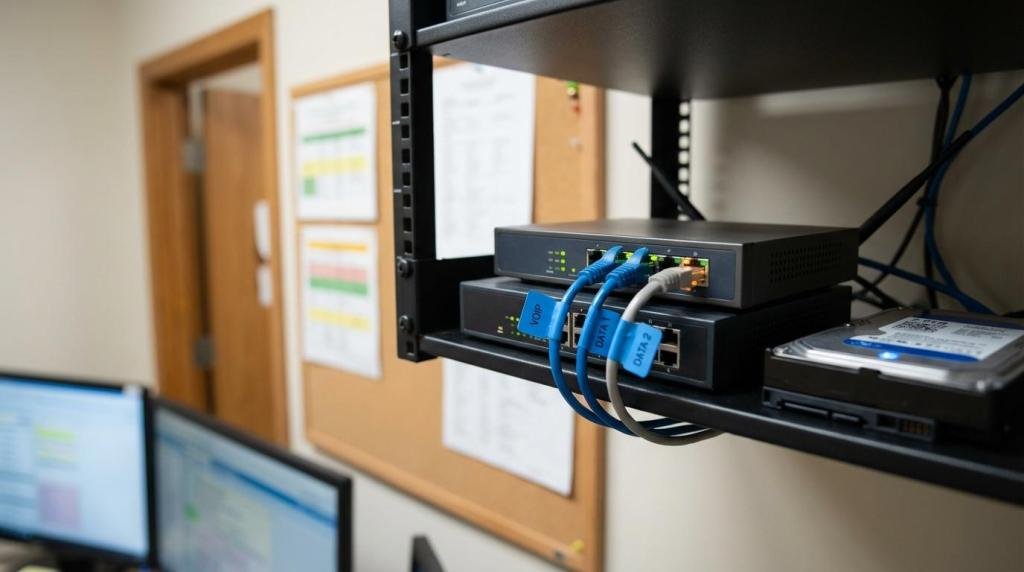
- Device consistency: unmanaged laptops and tablets are a frequent weak point in small clinics
A Sacramento-based managed IT provider that specializes in healthcare can often shorten the timeline by applying repeatable patterns across identity, endpoint management, secure integrations, and compliance documentation, while keeping day-to-day workflows realistic for staff.
When outside help is the right move (and how to scope it)
Some tasks are hard for SMBs to staff internally, even with a strong IT generalist. That does not mean outsourcing everything. It means outsourcing the parts that require depth or continuous coverage.
Good candidates for outside support include:
- 24/7 alert monitoring and response coordination
- SIEM or logging architecture and tuning
- Incident response planning and tabletop exercises
- Vulnerability management that includes prioritization, not only scanning
- Email security hardening and DMARC setup
- Security guidance tied to HIPAA, PCI, or cyber insurance requirements
When you engage a partner, scope matters as much as skill.
- Design and build: get it implemented correctly with documentation and knowledge transfer
- Operate: define what is handled daily, weekly, and monthly, plus escalation rules
- Prove: agree on reports that map back to CIS safeguards and your internal metrics
A co-managed model can work well for many SMBs: internal IT handles onboarding, basic tickets, and approvals; a SOC-led team handles monitoring, threat response, and security program tracking.
A practical way to start next week
Pick a single thread and pull it through the business: asset inventory to secure configuration to patching compliance. That sequence is measurable, it reduces real risk, and it builds momentum.
If you want to keep the plan simple, start by documenting your current state for IG1, choose three improvements you can complete in 30 days, and assign one owner to report progress every Friday. Once that rhythm exists, CIS Controls v8 stops being a document and starts being operations.
Comments are closed